Synopsis
'A highly entertaining story of literary friendship, epic legal battles and cultural politics centred on one of the most enigmatic writers of the 20th century' Financial Times
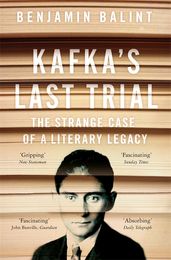
When Franz Kafka died in 1924, his friend Max Brod could not bring himself to fulfil the writer’s last instruction: to burn his remaining manuscripts. Instead, Brod took them with him to Palestine in 1939, and devoted the rest of his life to editing and canonizing Kafka’s work. By betraying his last wish, Brod twice rescued his legacy – first from physical destruction, and then from obscurity.
In Kafka’s Last Trial, Benjamin Balint offers a gripping account of the contest for ownership that followed, ending in Israeli courts with a controversial trial – brimming with legal, ethical, and political dilemmas – that would determine the fate of Kafka’s manuscripts. This is at once a biographical portrait of a literary genius, and the story of two countries whose national obsessions with overcoming the traumas of the past came to a head in a hotly contested trial for the right to claim the literary legacy of one of our modern masters.
Details
Reviews
“Thrilling and profound, Kafka’s Last Trial shines new light not only on the greatest writer of the twentieth century and the fate of his work, but also on the larger question of who owns art or has a right to claim guardianship of it . . . [Balint’s] research and lively intelligence deliver insights on every page.”Nicole Krauss
“Who should inherit Kafka? . . . Searing questions of language, of personal bequest, of friendship, of biographical evidence, of national pride, of justice, of deceit and betrayal, even of metaphysical allegiance, burn through Balint’s scrupulous trackings of Kafka’s final standing before the law.”Cynthia Ozick, Orange prize-shortlisted author of Foreign Bodies
“[A] fascinating and forensically scrupulous account of the history of Kafka’s papers.”John Banville, Guardian
“A literary battle that became Kafkaesque . . . remarkable . . . I warmly recommend this deeply absorbing book.”Daily Telegraph, Daily Telegraph