The Cazalet Chronicles: everything you need to remember before reading The Golden Hours
Need to refresh your memory before starting the new book? Here's a reminder of what's happened so far from Louisa Young, Elizabeth Jane Howard's niece, and author of The Golden Hours.
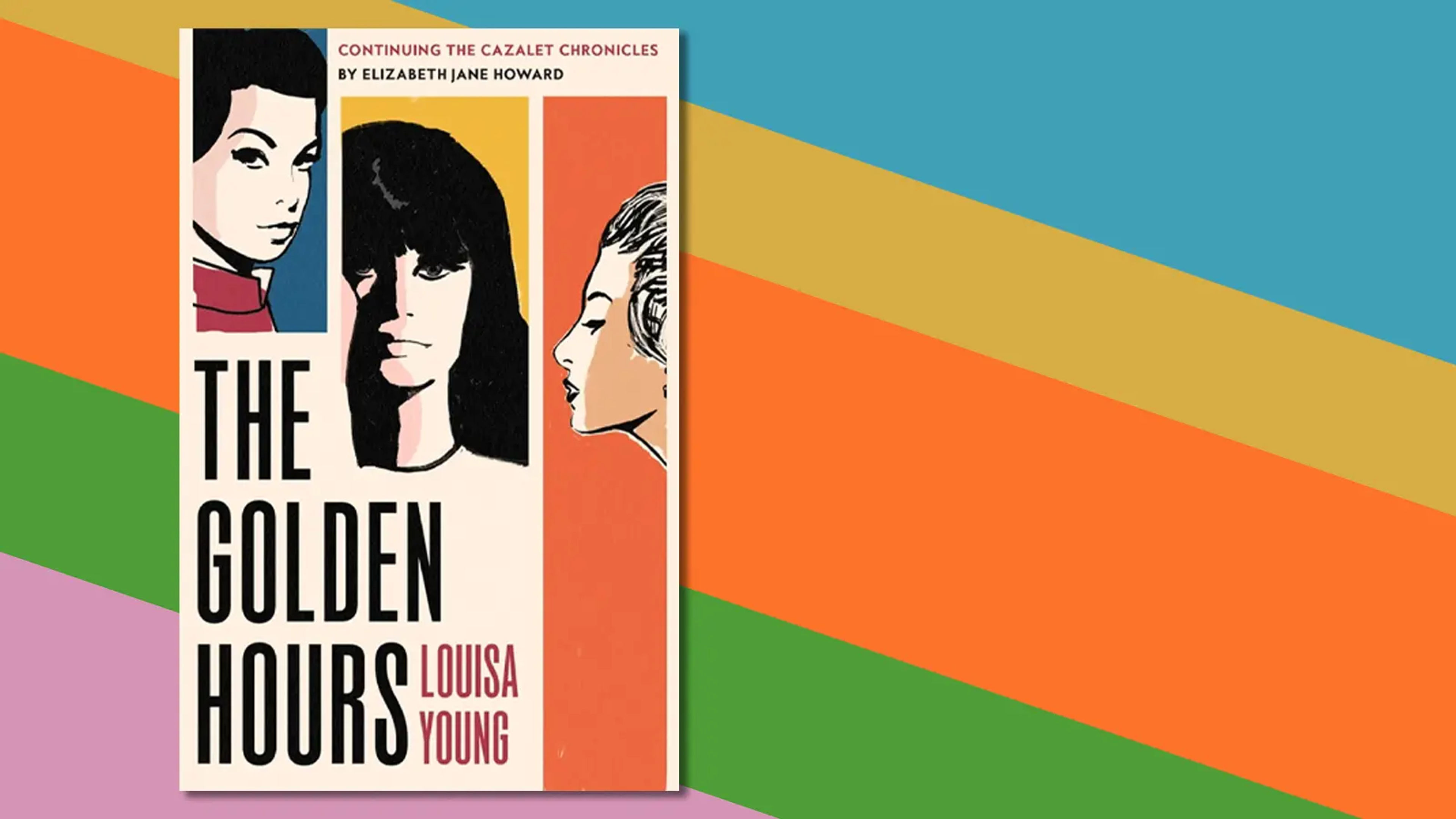
Continuing the story of one of the most beloved families in British literature, The Golden Hours is the brilliant new novel in Elizabeth Jane Howard’s iconic Cazalet Chronicles, written by her niece, the bestselling author Louisa Young. If you're a fan of the series and need a quick reminder of what has happened so far before starting the new book, you're in the right place. Here, Louisa Young gets you up to date (or at least, to 1958) with a recap of the series.
WARNING: this article contains spoilers. If you're new to the series, take a look at our guide to the the Cazalet Chronicles books in order to find out where to start.
The Cazalets are a large twentieth-century English family, their fortune based in the timber business, seemingly prosperous, seemingly normal, upper-middle class, semi-educated, and quite traditional. Their story is told over five original novels by Elizabeth Jane Howard.
The grandparents, known as The Duchy and The Brig, live with their unmarried daughter Rachel in a large family house in Sussex, Home Place, where their adult sons, Hugh, Edward and Rupert, visit for high days and holidays, with their wives and children. The first book, The Light Years, opens in 1937, when the three grand-daughters who become the main characters, Louise, Polly and Clary, are in their teens. World War One has faded away, though its damage lingers (Hugh lost his arm; Edward’s morality fractured, and Rupert never quite got over having been too young to serve). And World War Two is looming. The Light Years, Confusion, Marking Time, Casting Off and All Change follow the family through the hardships and demands of that war, and out the other side, as they learn to survive into the aftermath. All Change, the last of the original novels, ends in 1958. Elizabeth Jane Howard created this detailed, immersive and expressive world by fictionalising her own family, and in particular her own life and experiences, which she shared out between the three girls.
‘The Cazalets are a large twentieth-century English family, their fortune based in the timber business, seemingly prosperous, seemingly normal, upper-middle class, semi-educated, and quite traditional.’
As it’s been thirteen years since the publication of All Change, those looking forward to reading The Golden Hours can be forgiven for not quite remembering where we left the characters. Here’s how things stood in 1958, at the end of Elizabeth Jane Howard's last book in the series.
The Brig and the Duchy have both died and the family firm has folded, casting the Cazalets out into the world of employment, responsibility and paying one’s own bills.
Polly is married to a devoted but penniless Earl, Gerald, and is now chatelaine of his huge, ugly, ramshackle stately home in Norfolk. Here they have four chaotic children, dogs, a lake, hardly any income and a lot of Polly’s relatives living with them as real life turns out to be challenging without the family business to fall back on.
This includes her father Hugh, whose health is failing; and his second wife Jemima.
His son Simon, who was meant to be a doctor, lives there too, preferring the peace of hands-on work supporting his sister. Wills, Hugh’s younger son, is in the Army. Rachel has also taken refuge with Polly at Fakenham. Having lost the love of her life, Margot Sidney (Sid), to cancer, she now only wants to be useful.
Clary, in London, is a professional playwright, married with children. She and her family share a beautiful impractical house by the Thames in west London with her artist father Rupert, his wife Zoe and their young son George (and his small zoo, in the back garden). Her challenge lies in the search for the peace and privacy to write, and the right to take that time when children, husband and aging parents need her to play more traditional female roles.
Rupert, who disappeared in mysterious circumstances for many months in France at the end of the War, runs an art school in the same building, with Clary’s husband, his old friend Archie. It is not a very practical situation (as Rupert’s wife Zoe has to point out). They would both rather be artists than teachers and administrators, and furthermore the cellar floods at high tide.
Clary’s brother Neville, charming, amoral and destructive, was sent away to America after a family scandal which nobody wanted to look at too closely. He’s now working as a photographer in New York, and wants to get into film.
‘She knows she needs to sort herself out – but being very beautiful and having a terrible reputation doesn’t help. ’
Their young half-sister Juliet is beautiful and lost. She thinks she wants to be an actress, but she doesn’t really.
Louise is broken-hearted: after a failed early marriage which ended with her walking out on her husband and child, a horrible moment when her father Edward tried to kiss her when he was drunk, and a string of aggressive propositions and affairs with married men, she thinks she’s just no good at love. She knows she needs to sort herself out – but being very beautiful and having a terrible reputation doesn’t help. She shares a flat with her dear friend Stella, a hardworking journalist.
Louise’s parents, Edward and Villy, have divorced with maximum acrimony. Their other children, Lydia, Teddy and Roly, have left the country (for Scotland, Ghana and the Far East respectively) and are barely talking to either of them. Edward’s second wife Diana, for whom he left Villy, has left him. Villy lives in genteel poverty in St Leonards. Edward, with the remains of his charm, sponges off whoever he can.
The children born after the war – Laura, Harriet, Bertie, George, Jane, Eliza, Andrew and Spencer – are at school in London and Norfolk. Louise’s abandoned son Sebastian is growing up in New York. And Clary is pregnant but hasn’t realised.
The Golden Hours
Elizabeth Jane Howard was my aunt, and I loved both her and her writing. Reading the Cazalets was like eavesdropping on the secrets of my parents’ generation. I felt that the characters must be continuing their lives, unwatched, just offstage, and wanted to see what was happening with them. With the blessing of the Estate, and with fifteen books of my own published, in 2024 I began picking up loose ends, reconsidering unfinished business and teasing out further developments among the Cazalet family members. The Golden Hours is the first of three new books continuing the Cazalets. It would have been silly to wake them all up again for just one more novel.
The Golden Hours
by Louisa Young

It’s December 1962, and the Cazalet family are gathering to celebrate Christmas. With the family’s beloved Home Place long sold, Polly and Gerald have offered up their rambling stately pile, Fakenham Hall in Norfolk, to parents, siblings, cousins and children. Familiar faces reappear, newcomers are introduced, and the legacy of the Cazalets carries on into the Swinging Sixties.