Authors' Notes: Elizabeth O'Connor on writing the present through the past, and six of her favourite historical fiction novels
The author of critically acclaimed debut Whale Fall recommends reads to take you from 1930s Berlin, to post‑war London, to 1970s Beijing.
I have always been taken with the idea that historical novelists are, in their own way, historians of the present. When we write about the past, we are really thinking about the now by looking at it askance and through the long shadows cast by what came before. Historical fiction offers the pleasure of meticulous research and immersion in a familiar and alien world, but it also reveals how ordinary people shape history and how history shapes us. At its best, it is deeply transporting and brings us closer to understanding, even reimagining, our own lives and preoccupations.
The books in this list do what great historical fiction should. They illuminate, they transport, they seek out thought and feeling as well as fact. From 1930s Berlin to post‑war London to 1970s Beijing, their characters are driven by the same forces that move us: ambition, desire, fury, inspiration, disappointment, love. They show that the pressures shaping our lives today have long histories, and they remind us that stepping into another time can often be the clearest way of seeing our own.
Watershed
by Percival Everett

Percival Everett’s Watershed follows Robert Hawks, a Black hydrologist whose quiet fishing trip north of Denver pulls him into a violent struggle over Native American treaty rights and government secrecy. As he uncovers evidence of biological waste leaking into reservation waterways, Robert is drawn into a network of activists whose histories echo Black and Indigenous resistance movements. Like Everett’s other work, the novel is sharp-tongued, urgent, and politically electric. It’s not exactly a beach read (!), but it is perfect for readers who love fiction that interrogates the ways that land, civil rights and power are constantly intertwined.
The Light Years

You could spend an entire summer immersed in Elizabeth Jane Howard’s Cazalet Chronicles, but I’ll restrain myself to recommending the first instalment, The Light Years, a deeply-felt, intricate portrait of a family on the brink of change. Set in Sussex in the late 1930s, the novel beautifully sketches a quintessentially British summer (trips to the seaside, picnics, children racing through orchards, complaints about the heat) alongside three brothers navigating desire, duty, and the looming shadow of war.
The Vagrants
by Yiyun Li
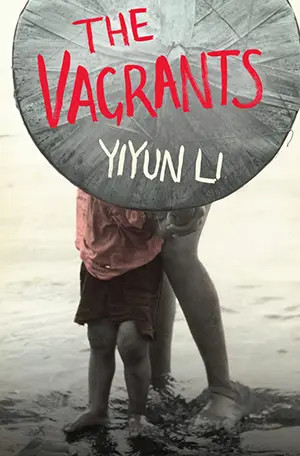
Sometimes, historical fiction can illuminate a point in history that you knew nothing about. Yiyun Li’s The Vagrants unfolds in China in 1979, when Beijing was rocked by the anti-communist Democratic Wall Movement, and the public execution of a young woman sends tremors through a small town. Moving through alleys, kitchens, and cramped apartments, Li reveals how political violence infiltrates the smallest corners of daily life. Most of all, however, it’s a novel of hope and tenderness, and a universal portrait of human resilience.
Venus, Vanishing
by Rebecca Birrell

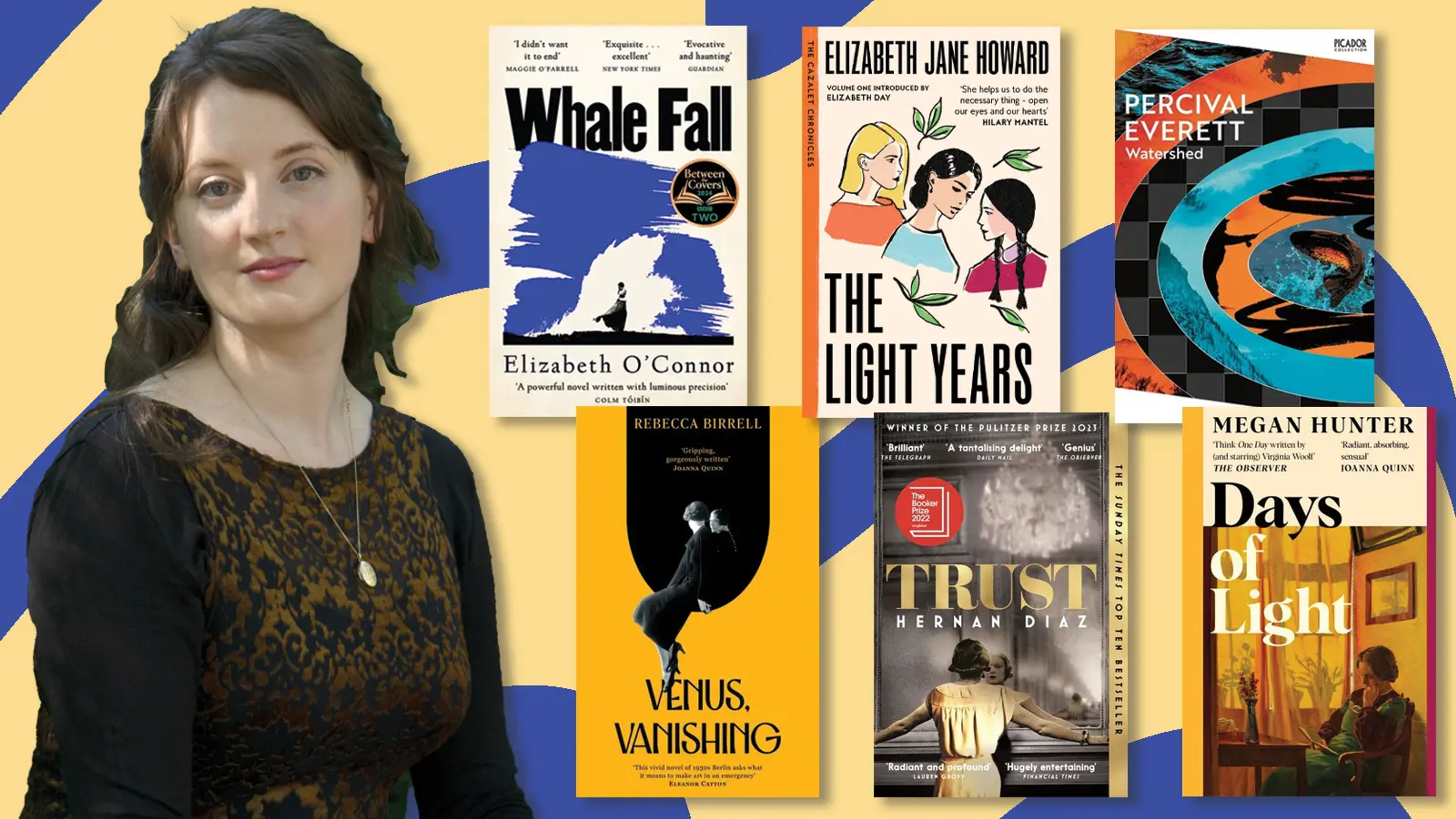
Birrell’s background as an art historian infuses Venus, Vanishing with a tactile sense of place. The textures of 1930s Berlin (fabric, thread, light, skin, paint) are rendered with such precision that they feel animate, giving the novel a distinctive, material intensity. Hannah, a painter, is hired to produce a series of nude portraits that draw her into a dangerous convergence of desire, ambition, and political menace. Birrell’s writing is astonishing, at once measured, intimate and volatile, as she uncovers queer life in Berlin amidst the rise of fascism and complex histories of German and Jewish art.
Trust
by Hernan Diaz

Trust is a puzzle box of a novel. Diaz traces the legend of a Wall Street financier through four interlocking texts (and four unreliable narrators), asking who gets to tell our histories, and who (and what) gets written out. It holds to account the ways that we mythologise wealth and power under capitalism, while being slippery in its own metafictional telling. I don’t mean to make it sound like a headache - it has the masterful balancing act of all great novels by wearing its intelligence and formal daring lightly; mostly, it’s whip-smart, compulsively readable, and deeply moving.
Days of Light
by Megan Hunter

Like Trust, Megan Hunter’s Days of Light is structured around the spaces in a story, tracing six Easter Sundays across sixty years of Ivy’s life. Hunter is one of my favourite stylists; her prose is lyrical, restrained, introspective, expansive and she is particularly good at making small details and gaps in a story sing. A mysterious flash of light in 1938 becomes the novel’s quiet gravitational pull, shaping decades of longing, grief, war, faith, and self‑discovery. Inspired by Charleston House in Sussex, it’s also a mediation on self-expression, queerness and the changing roles of women in the twentieth century.
Elizabeth O'Connor is the author of Whale Fall
Whale Fall
by Elizabeth O'Connor

1938. For Manod, a young woman living on a remote island off the coast of Wales, the world looks ready to end just as she is trying to imagine a future for herself. When two anthropologists from the mainland arrive, Manod sees in them a rare moment of opportunity to leave the island and discover the life she has been searching for. But, as she guides them across the island’s cliffs, she becomes entangled in their relationship, and her imagined future begins to seem desperately out of reach.
Author photograph © Ilona Denton