Authors' Notes: Kiran Millwood Hargrave on what ifs, missed chances and five books that explore our almost lives
The bestselling author discusses the allure of contemplating what could have been, her new novel, Almost Life, and five recommended reads.

Who doesn’t wonder about the road not taken?
There are the near-misses: the times we trusted our gut, were brave enough to leave, or leap. There are the missed chances: when we should have said sorry, or yes, or stayed. Often these moments go by without us even noticing – my husband and I met seventeen years ago because he didn’t want to cycle home in the rain and so came to the after party I was at. If it hadn’t been raining, we may never have met, let alone kissed. Two best friends met because they complimented each other on their clothes in a ladies bathroom. I think about telling strangers I like their outfit a dozen times a day, but rarely do. If I had, who might I have come to know, to love?
It is much easier – and often more satisfying – to explore this sensation in literature. So many of my favourite novels involve this theme, and so it’s no surprise that my new novel Almost Life not only revolves around these hinge moments in two women’s lives, but explicitly references them in the title. If you’re feeling wistful, hopeful, or maybe contemplating making a different choice next time, here are some novels that might offer inspiration, comfort, or caution.
John of John
by Douglas Stuart

At the centre of Stuart’s best book yet, a son and father, John-Calum (Cal) and John, confront themselves, each other, and both internalised and external homophobia on the Scottish island of Harris. This is a beautiful, hopeful, highly-textured novel where many voices take centre stage. Possibly my favourite strand was the exploration of the relationship between the father and his best friend. It starkly shows how shame grows in the shadows, and how there is nothing admirable about a stoicism that hurts the people you love. It had me gasping at the page, urging them to JUST. SAY. IT.
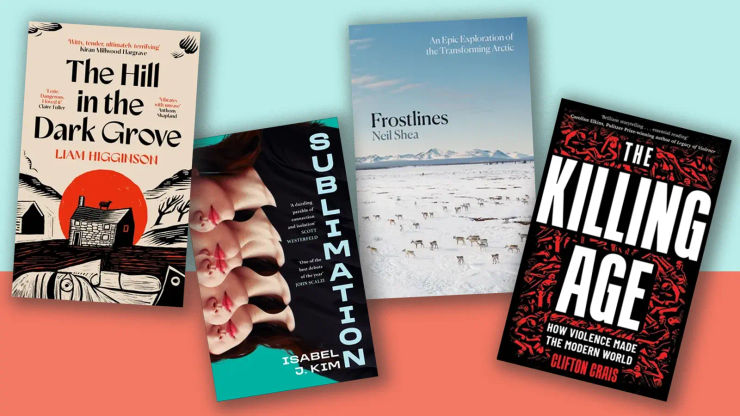
Sublimation
by Isabel J. Kim

In this incredible debut novel, Kim offers a physical manifestation of hinge moments – the border. In this world, immigrants literally leave themselves behind when they move to another country, and their two selves, or ‘instances’, exist as separate beings on opposite sides of the border. Soyoung Rose Kang, upon moving to America, becomes Rose in the US and remains Soyoung in Korea. When Rose is forced to return for her grandfather’s funeral, she must confront herself in more ways than one. A provocative exploration of immigration, diasporic dysphoria and identity, it’s also a gripping thriller that speaks absolutely to our moment.
Long Island
by Colm Tóibín

In this sequel to Brooklyn, Irish immigrant Eilis is living in Long Island, married-with-kids to the man she chose at the end of the first book, Tony. Then she discovers another woman is pregnant with Tony’s child, she takes her children and goes back to Ireland. There, she finds the life – and the man – she left behind, and gets to linger in the what-if of choosing to stay in her homeland with Jim. This and Brooklyn combine to create the swooniest, most tender, wistful love story – something I was keen to evoke in Almost Life.
Remains of the Day
by Kazuo Ishiguro
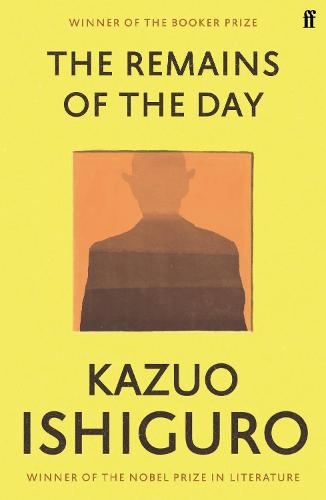
I think this is one of those books that establishes itself so utterly in the reader’s mind and soul, you can summon exactly where and who you were when you read it. I was a first year university student, and there was something about reading this story, so full of the nostalgia and elusive memories of a life already mostly lived, that felt bittersweet. Almost like a warning, or a reminder to pay attention, and live with your eyes and heart wide open. Full of ‘what-ifs’ and ‘if-onlys’, it’s a book that creates its own weather, and you can’t help but be flooded with its sense of ennui and beauty.
Life After Life
by Kate Atkinson

Atkinson’s protagonist Ursula has infinite lives, and in this bold, big stakes book set against the First and Second World Wars, we see the many ways those lives unfold, her trajectory changing according to whether she takes shortcuts across fields or smiles at the wrong person. I once saw this described as an ‘accordion fold’ of a novel, and it does slip into itself that easily, as lyrically. Atkinson is so clever on fate, choice, and human nature, and this is one of my favourite examples of speculative fiction.
Kiran Millwood Hargrave is the author of Almost Life
Almost Life
by Kiran Millwood Hargrave

Spanning across cities and decades, this is a story of the lives we almost live and the choices we don't make. Paris, 1978. Erica is a student, relishing her first summer abroad before beginning university at home in England. Laure is studying for her Ph.D. at the Sorbonne, drinking and smoking far too much, and sleeping with a married woman. When they meet on the steps of the Sacré-Cœur, Erica and Laure form an undeniable connection that will determine the course of their lives – almost.