Seven reasons Gwendoline Riley should be at the top of your TBR this year
With her highly anticipated new literary fiction novel, The Palm House, longlisted for the Booker Prize 2026 and hailed as a must-read of the year, if you're not already in love with Gwendoline Riley's writing, Alex Peake-Tomkinson is here to explain why you will be very soon.
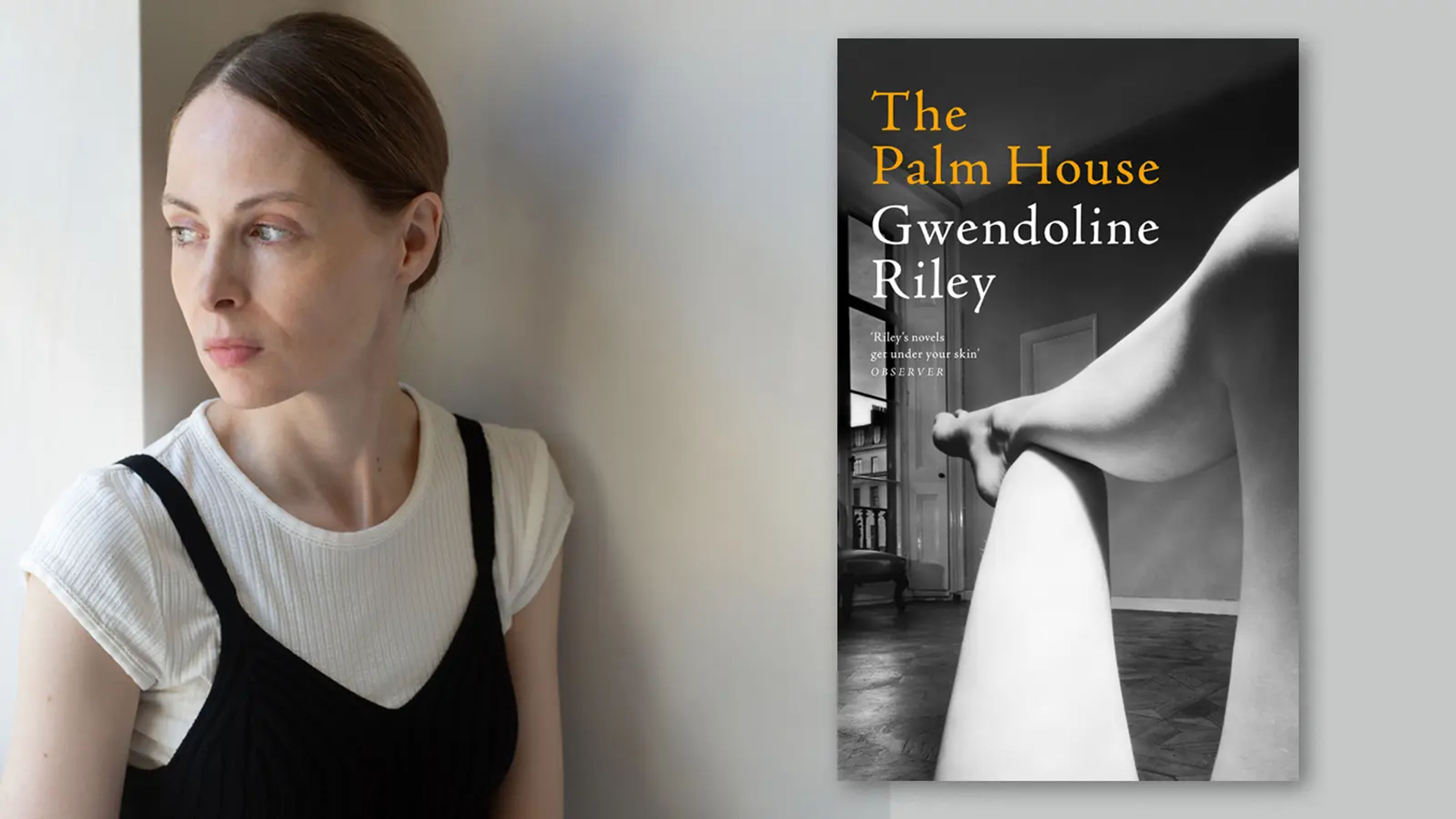
For those of us who are fascinated by the terrain of the human heart, Gwendoline Riley is essential reading. She is the author of seven short, fierce novels and one short story collection. Famed for her mordant wit, her peerless sentences and her singular heroines – all of whom are fervently plotting their own course – she has long been established as a cult figure. Her latest novel, The Palm House, has just been longlisted for the Booker Prize and for lovers of the best literary fiction, it is a must-read book of 2026.
If you haven’t read her before, prepare yourself for the quiet perfection of her prose. When judging the 2017 Geoffrey Faber Memorial Prize, the novelist Evie Wyld said of Riley’s winning novel, First Love: 'It’s slim but has a powerful gravitational field, each word placed with expert care.' The same could be said for all of Riley’s books, which each pack an emotional punch that belies their page length.
If this alone isn’t enough to convince you, here are seven more reasons why you need to make 2026 the year you discover Gwendoline Riley.
She writes emotionally exacting prose
Her emotionally exacting prose and her focus on marginalised women make Riley an heir to the novelist Jean Rhys, whose most famous book Wide Sargasso Sea is a postcolonial and feminist prequel to Charlotte Brontë’s Jane Eyre. Whilst Riley’s work can appear less overtly political, it is implicitly feminist. In 2007, she said to me 'Of course, I’m a feminist and I would hope that it’s obvious that my books are feminist.'
In explaining the method behind her verbal brilliance, Riley told me 'I choose every word I write, choose it six times, unchoose it and then choose it again. It's too important not to.' I’m not alone in noting the depth she, like Rhys, can bring to a short passage of writing – an early reviewer of Riley’s said 'she can write astoundingly well, sometimes handling language like she invented it, with shocking confidence.'
You can read one of her novels in an afternoon
She tends to write short books – all of them have fewer than 250 pages. This means if you haven’t read her before, taking the plunge will not feel like an onerous commitment.
Her books are for anyone who has a difficult family i.e. anyone who has a family
Riley’s previous book, the coruscating My Phantoms (2021), focused – not unusually for her – on a dysfunctional relationship between a mother and daughter. Talking about the heroine of her Women’s Prize-shortlisted novel First Love (2017), she also said 'The first love should perhaps be with your mother, your first experience of love and reciprocity. Neve can’t have that kind of love with a mother like hers.' And in Riley’s first book, Cold Water (2002), the narrator refers to the 'bland fact of a failed family'. Riley's unflinching honesty in depicting familial discord can be a shock the first time you encounter it but it has won her the hearts of legions of readers for whom there is so much resonance in these tender portrayals of families failing to connect.
The Palm House 'has the most heart, and was the most tender, of all her books.'
The Palm House is different from most of her work in that it is principally about friends – in particular, the narrator Laura Miller and her colleague Edward Putnam – rather than family. It is also a media satire on the state of highbrow journalism. Laura and Putnam have formed a possibly unusual friendship through work. Putnam is the deputy editor of a magazine called Sequence and Laura is a freelance contributor to it. They spend evenings in an old pub near the Thames, exchanging gossip about their colleagues, reflecting on their younger selves and their concerns for the future.
Riley writes brilliantly about friendship and it is examined most fully in The Palm House, particularly in the pathos of Laura trying to bring Putnam back from the brink as he deals with the collapse of his professional identity and the death of his father.
The phrase 'chosen family' seems made for Riley’s heroines. The author Sheila Heti – who wrote Pure Colour – says The Palm House ‘has the most heart, and was the most tender, of all her books, and there was more love in it, I suppose because she’s writing about friends and not family.'
She is one of the funniest writers working today
The humour in Gwendoline Riley’s writing may be laughter in the dark but she is one of the funniest writers working today. For example, in Cold Water, the narrator tells a friend: 'I feel like a waterlogged corpse. I can feel my life slipping through my hands like silk cord. That is to say, it’s my birthday today, you know.' There is more of this in The Palm House, not least in the characterisation of Sequence’s fatuous new editor Simon Halfpenny who announces, 'Call me Shove'.
Don’t just take my word for it: brilliant writers think she is a brilliant writer
Sheila Heti is not Riley’s only famous fan. David Nicholls, the author of One Day has described her work as 'So painful, so funny and acutely observed'; the Booker Prize-winning novelist Anne Enright has said Riley 'shows herself more than up to the job of writing the wasted hinterlands of the human heart' and the 2025 Booker Prize winner David Szalay has said 'Gwendoline Riley writes beautifully and memorably.'
Sarah Perry – author of The Essex Serpent – has praised The Palm House in particular, saying 'This pristine book confirms Riley's position among the finest novelists working today. Her sentences are crystalline and perfect, and her attention to the world is always acute and occasionally tender – I love this book, and am awed by Riley's accomplishment.'
She’s a prize winner
Cold Water, which was written whilst Riley was still at university, won a Betty Trask Award in 2002 and was voted one of the top five novels of the year by the Guardian. Riley’s third novel Joshua Spassky won the Somerset Maugham Prize in 2008 and in 2017, First Love won the Geoffrey Faber Memorial Prize. In 2018, The Times Literary Supplement named her as one of the twenty best British and Irish novelists working today.
Gwendoline Riley may be uneasy about her burgeoning popularity. Speaking to me once, she quoted a line from Muriel Spark, ‘You don’t want cheap people reading your books, do you?’, before bursting out laughing and adding 'Five or six nice people will do.' Whether she likes it or not, she will have to get used to considerably more people reading her books.
The Palm House
by Gwendoline Riley

Why read this: A friendship begins to fracture under the quiet pressures of grief, failure and time. As Edmund Putnam withdraws following personal and professional upheaval, Laura Miller is left to reckon with her own precarious life while trying to pull him back. Set between the fading world of a literary magazine and long evenings in a Thames-side pub, this is a precise, unsparing study of loyalty, disillusionment and the fragile structures that hold us together. Selected by BBC Culture as one of the most anticipated books of 2026.
If you're looking for: Friendship, grief, literary satire, emotional precision, dark humour.
Great for fans of: Rachel Cusk, Claire Keegan, Deborah Levy.
What the experts think: ‘Outstandingly brilliant’ – Claire-Louise Bennett. 'I love this book, and am awed by Riley's accomplishment' – Sarah Perry, author of The Essex Serpent.