Synopsis
Shortlisted for the Walter Scott Prize.
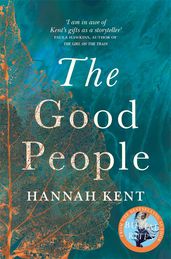
Based on true events, The Good People is Hannah Kent's engrossing novel about superstition and devoted love.
'An even better novel than Burial Rites — a starkly realised tale of love, grief and misconceived beliefs – Sunday Times
Ireland, 1825.
Nóra, bereft after the sudden death of her husband, finds herself alone and caring for her young grandson Micheál, who cannot speak or walk. What happened to the healthy, happy grandson she met when her daughter was still alive?
Mary arrives in the valley to help Nóra just as the whispers are spreading: stories of unexplained misfortunes, of illnesses, and rumours that Micheál is a changeling child who is bringing bad luck to the valley.
Nance has lived in the valley all of her life. She is a healer who knows how to use the plants and berries of the woodland; she understands the magic in the old ways. And she might be able to help Micheál . . .
As these three women are drawn together in the hope of restoring Micheál, their world of folklore and belief, of ritual and stories, tightens around them. It will lead them down a dangerous path, and force them to question everything they have ever known.
'An imaginative tour de force . . . exquisite' – Daily Mail
Details
Reviews
“Lyrical and unsettling . . . A literary novel with the pace and tension of a thriller . . . I am in awe of Kent's gifts as a storyteller.”Paula Hawkins, bestselling author of The Girl on the Train
“A thoroughly engrossing entrée into the macabre nature of a vanished society, its virtues and its follies and its lethal impulses . . . utterly unexpected ”Thomas Keneally, Booker Prize-author of Schindler's Ark
“Beautiful . . . the setting and the characters drew me in immediately and kept me completely absorbed”Claire King, author of The Night Rainbow
“Kent has a terrific feel for the language of her setting. The prose is richly textured with evocative vocabulary . . . A serious and compelling novel about how those in desperate circumstances cling to ritual as a bulwark against their own powerlessness”Graeme Macrae Burnet, Guardian